Plant Hardiness Zones 5–7 Explained: The Ultimate Gardening Guide for Temperate Climates
Successful gardening depends on more than planting at the right time. Winter temperatures, seasonal timing, frost risk, and local climate conditions all influence which plants thrive and how productive a garden becomes throughout the year.
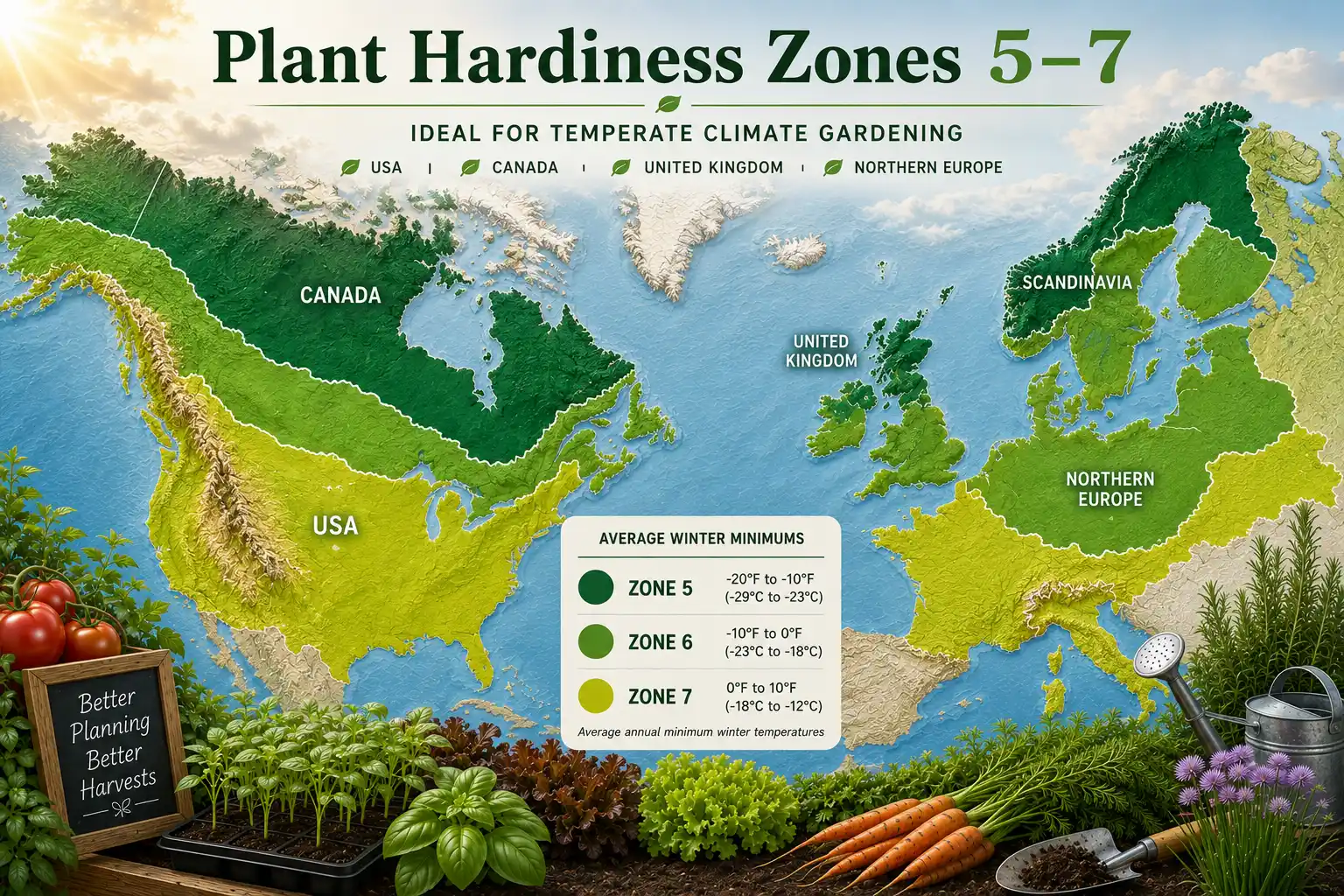
Plant Hardiness Zones 5–7 include some of the world’s most active temperate gardening regions, including large parts of the United States, southern Canada, the United Kingdom, and Northern Europe. These climates support a wide range of vegetables, herbs, berries, flowers, and fruit trees while still experiencing the seasonal changes many crops naturally require.
This guide explains how Plant Hardiness Zones 5–7 work, how climate differences affect gardening decisions, which plants grow best in temperate regions, and how to use hardiness information more effectively throughout the growing season. Gardeners looking for more accurate sowing and transplant timing can also combine zone knowledge with the Planting Calendar for better year-round growing planning.
What Are Plant Hardiness Zones and Why Do They Matter
Plant hardiness zones are climate classifications based on the average annual minimum winter temperature in a specific region. Their main purpose is to help gardeners identify which plants can realistically survive outdoors through winter and return successfully the following growing season.
The system most gardeners recognize today comes from the USDA Plant Hardiness Zone Map, one of the most widely used climate references in horticulture. The map divides regions into numbered zones according to long-term winter temperature averages collected over many years. Each full zone represents a 10°F temperature range, while subzones such as 5a, 5b, 6a, or 6b provide more detailed distinctions.
Although the concept sounds technical, hardiness zones solve a very practical problem. Every plant has a temperature limit. Some crops and ornamental plants tolerate deep winter freezes without difficulty, while others experience root damage, crown rot, stem splitting, or complete death once temperatures drop below their tolerance level. Hardiness zones help gardeners avoid planting species that are unlikely to survive in their local climate.
For example, lavender varieties that thrive in Zone 7 may struggle during prolonged Zone 5 winters without heavy protection. Likewise, certain fruit trees require cold winters for proper dormancy, while others suffer damage from repeated freeze-thaw cycles common in colder temperate regions.
One of the biggest misconceptions is believing that hardiness zones describe the entire climate of an area. They do not. A hardiness zone mainly measures winter cold extremes, not summer heat, rainfall, humidity, wind exposure, soil drainage, or overall growing season length.
This is why two locations in the same zone can still produce very different gardening results. Coastal United Kingdom gardens often experience mild, humid winters and cool summers, while inland North American Zone 6 regions may face hotter summers, drier conditions, and more dramatic seasonal swings. Northern European gardeners may share similar winter minimums with parts of the northeastern United States, yet still deal with shorter daylight hours and slower spring soil warming.
Understanding these differences is what separates beginner gardening advice from truly effective planting strategies. Experienced growers use hardiness zones as a climate foundation, then combine that information with frost dates, seasonal weather patterns, soil conditions, and planting calendars
For gardeners living in Plant Hardiness Zones 5–7, this balance becomes especially important. These temperate regions sit in a highly productive middle ground where gardeners can grow an enormous variety of crops, but timing remains critical. A few weeks too early or too late can significantly affect germination, transplant success, harvest quality, and winter survival.
When used correctly, hardiness zones become more than a map reference — they become a practical tool for planning healthier, more productive gardens year after year.
Understanding the Difference Between Zones 5, 6, and 7
Plant Hardiness Zones 5–7 sit within one of the most productive gardening ranges for temperate climates. These regions experience distinct seasons, relatively reliable rainfall patterns, and enough summer warmth to grow a wide variety of crops successfully. At the same time, winter conditions remain cold enough to influence planting schedules, overwintering strategies, and long-term plant survival.
Although neighboring zones may appear similar on a map, even small differences in winter minimum temperatures can significantly affect gardening decisions.
Zone 5 — Colder Winters and Shorter Growing Seasons
Zone 5 regions typically experience average winter minimum temperatures between -20°F and -10°F (-29°C to -23°C). Winters are longer, spring warming happens more gradually, and late frosts can remain a concern well into spring.
Gardeners in Zone 5 often rely heavily on season extension methods such as cold frames, row covers, indoor seed starting, and greenhouse propagation. Warm-season crops like tomatoes, peppers, eggplants, and melons usually need an earlier indoor start to reach full maturity before autumn frost arrives.
However, Zone 5 also provides important advantages. Many perennial vegetables, berry bushes, garlic varieties, fruit trees, and flowering plants benefit from strong winter dormancy periods. Cool-season crops such as cabbage, kale, spinach, peas, onions, and carrots often perform exceptionally well in these conditions.
For gardeners following a bold seasonal planting schedule, Zone 5 timing becomes especially important because spring planting windows are narrower and sudden cold snaps remain common during seasonal transitions.
Zone 6 — One of the Most Flexible Gardening Climates
Zone 6 is often considered one of the best hardiness zones for food gardening. Winter minimums generally range between -10°F and 0°F (-23°C to -18°C), creating a climate that supports both cold-hardy crops and a wider selection of heat-loving vegetables.
The growing season is typically long enough for tomatoes, beans, cucumbers, squash, potatoes, sweet corn, herbs, and many fruit varieties to mature reliably outdoors. Gardeners also gain more flexibility with direct sowing schedules and succession planting throughout the summer
At the same time, Zone 6 still experiences enough winter cold to support crops that require dormancy, including many apple, cherry, plum, and pear tree varieties.
This combination makes Zone 6 particularly productive for backyard gardens and homesteads that aim to grow food continuously from early spring through late autumn
Zone 7 — Milder Winters and Longer Harvest Opportunities
Zone 7 regions experience average winter minimum temperatures between 0°F and 10°F (-18°C to -12°C). Winters are milder, spring often arrives earlier, and gardeners typically enjoy a noticeably longer growing season.
These conditions allow for earlier sowing dates, longer harvest windows, and increased opportunities for fall gardening. In many Zone 7 areas, cool-season vegetables can be planted both in spring and again in late summer for autumn or even winter harvests.
Plants that struggle in colder climates, such as rosemary, figs, certain grape varieties, and some evergreen herbs, often survive outdoors more successfully in Zone 7 gardens.
However, milder winters can also introduce different challenges. Increased humidity, fungal diseases, inconsistent winter dormancy, and early false springs may create problems that colder northern zones avoid
Why Zone Boundaries Are Not Absolute
Even within the same hardiness zone, local conditions can vary dramatically. Urban heat islands, coastal influence, elevation changes, nearby forests, slope direction, and wind exposure all affect real growing conditions.
A sheltered south-facing garden in Zone 5 may outperform an exposed open field in Zone 6. Likewise, raised beds can warm significantly faster in spring than the surrounding ground soil, allowing gardeners to begin planting earlier than regional averages suggest
This is why successful gardeners rarely rely only on hardiness maps. The most reliable approach combines climate zones with local observation, frost tracking, and seasonal planting schedules.
For this reason, many growers use a detailed Planting Calendar alongside hardiness zone information to better understand when to sow seeds, transplant seedlings, and protect crops during seasonal transitions.
How to Find Your Plant Hardiness Zone
Identifying your plant hardiness zone is one of the simplest ways to improve planting accuracy and avoid costly gardening mistakes. Even experienced gardeners occasionally struggle with poor crop performance when plants are selected for climates that are either too cold or too warm for long-term survival.
Fortunately, determining your hardiness zone is usually straightforward once you understand which factors matter most.
Start With Your Geographic Region
In many cases, your approximate hardiness zone already aligns closely with your broader geographic location.
For example:
- Large areas of the northern United States and southern Canada fall into Zone 5.
- Many central U.S. regions belong to Zone 6.
- coastal areas, southern regions, parts of the United Kingdom, and much of Western Europe commonly fall into Zone 7.
However, regional averages alone are not always reliable. Elevation, coastal influence, nearby lakes, and urban environments can all shift local growing conditions significantly.
Use Official Hardiness Zone Maps Carefully
The USDA Plant Hardiness Zone Map remains one of the most accurate starting points for North American gardeners. Similar climate resources are also available for the United Kingdom and Europe, helping growers better understand how winter temperatures affect long-term plant survival.
However, hardiness maps should be treated as guidelines rather than absolute rules. A map cannot fully account for local microclimates, wind exposure, frost pockets, heavy clay soil, nearby buildings, or sheltered urban gardens that retain additional warmth during winter.
This explains why two gardens located only a few miles apart can sometimes produce very different results. One property may warm quickly in spring and protect plants from harsh winter winds, while another remains colder and wetter well into the growing season.
Experienced gardeners often combine official hardiness maps with real seasonal observations instead of relying entirely on generalized climate data.
Pay Attention to Frost Dates and Seasonal Timing
Knowing your hardiness zone is extremely useful, but understanding your local frost dates is equally important. Two gardeners living in the same zone may still experience major differences in:
- Last spring frost dates.
- First autumn frost dates.
- Soil warming speed.
- Rainfall patterns.
- Humidity levels; Overall growing season length.
This is one reason why planting schedules vary even within the same climate zone. Hardiness zones primarily describe winter survival conditions, while monthly planting calendars help determine the safest and most productive times for sowing, transplanting, and harvesting crops
For gardeners in temperate climates, combining zone knowledge with a structured Planting Calendar often produces significantly better results than relying on hardiness zones alone.
Observe Your Own Garden Over Time
One of the most valuable gardening skills cannot be found on any climate map — long-term observation. After several growing seasons, gardeners begin recognizing patterns unique to their own space:
- Which beds warm first in spring.
- Where frost lingers longest.
- Which areas drain poorly after heavy rain.
- Where walls reflect additional heat.
- Which crops consistently perform better than expected.
These small observations gradually become just as important as official hardiness classifications.
Many highly productive gardens succeed not because conditions are perfect, but because gardeners adapt their planting strategies to local conditions year after year. Hardiness zones provide an essential foundation, but real gardening expertise develops through observation, experimentation, and seasonal experience.
Best Vegetables, Herbs, and Fruits for Zones 5–7
One of the biggest advantages of Plant Hardiness Zones 5–7 is their remarkable growing flexibility. These temperate climates allow gardeners to grow a wide range of crops, from cold-hardy leafy greens and root vegetables to heat-loving tomatoes, peppers, berries, and fruit trees.
However, not every plant performs equally well across all three zones. Differences in winter severity, summer heat, frost timing, and growing season length can significantly influence plant health, harvest quality, and overall productivity.
Understanding which crops naturally thrive in your zone helps reduce gardening frustration and improves long-term success.
Best Vegetables for Zone 5 Gardens
Zone 5 gardeners often work with shorter growing seasons and colder spring temperatures, which makes crop selection especially important.
Cool-season vegetables tend to perform exceptionally well in these conditions. Many gardeners in Zone 5 achieve excellent harvests with:
- kale;
- cabbage;
- carrots;
- onions;
- garlic;
- peas;
- spinach;
- lettuce;
- beets;
- broccoli.
These crops tolerate cooler soil temperatures and can often survive light frosts without major damage.
Warm-season vegetables are still highly productive in Zone 5, but they usually require more planning. Tomatoes, peppers, squash, cucumbers, pumpkins, and melons often benefit from indoor seed starting several weeks before outdoor planting becomes safe.
Many Zone 5 gardeners also rely on row covers, hoop tunnels, raised beds, and greenhouse protection to extend the growing season and improve harvest reliability.
Productive Crops for Zone 6 Gardens
Zone 6 offers one of the most balanced climates for home food production. The growing season is typically long enough to support both cool-season and heat-loving crops without extreme seasonal limitations.
Gardeners in Zone 6 can successfully grow nearly all common vegetable crops, including:
- tomatoes;
- peppers;
- beans;
- cucumbers;
- zucchini;
- sweet corn;
- potatoes;
- onions;
- carrots;
- leafy greens.
This zone also works extremely well for succession planting, where gardeners sow multiple rounds of crops throughout the season for continuous harvests.
Many herbs thrive in Zone 6 conditions, especially:
- basil;
- parsley;
- thyme;
- oregano;
- sage;
- dill;
- chives.
Fruit production is also highly reliable in many Zone 6 regions. Apples, pears, cherries, blueberries, raspberries, currants, and strawberries often perform very well when given proper sunlight and soil drainage.
What Grows Best in Zone 7
Zone 7 gardens benefit from milder winters and longer growing seasons, creating opportunities for extended harvest periods and greater crop diversity.
In many Zone 7 regions, gardeners can begin planting earlier in spring and continue harvesting much later into autumn. Some cool-season crops can even overwinter successfully with minimal protection.
Popular Zone 7 vegetables include:
- tomatoes;
- peppers;
- eggplants;
- okra;
- sweet potatoes;
- cucumbers;
- squash;
- beans;
- leafy greens.
Herbs such as rosemary, lavender, bay laurel, and thyme often survive winters outdoors more successfully than they do in colder climates.
Zone 7 also supports a wider range of fruit crops, including:
- figs;
- grapes;
- peaches;
- blackberries;
- blueberries.
However, warmer conditions can also increase pressure from fungal diseases, pests, and excessive summer heat stress. Good airflow, mulching, crop rotation, and proper watering practices become increasingly important.
Perennials vs Annuals in Temperate Climates
Understanding the difference between annual and perennial plants becomes especially valuable in Zones 5–7.
Annual crops complete their life cycle within a single growing season. Vegetables such as tomatoes, cucumbers, beans, and lettuce must usually be replanted every year.
Perennial plants, on the other hand, survive multiple seasons and continue returning year after year. Examples include:
- asparagus;
- rhubarb;
- berry bushes;
- fruit trees;
- lavender;
- mint;
- thyme;
- many ornamental flowers.
Hardiness zones become particularly important for perennial gardening because winter survival directly determines whether plants can return successfully each spring.
A perennial that survives comfortably in Zone 7 may struggle or die during harsh Zone 5 winters without additional insulation or protection.
Why Local Conditions Still Matter
Even the best crop recommendations should always be adjusted for local conditions. Soil quality, rainfall, humidity, elevation, wind exposure, sunlight hours, and nearby structures all influence plant performance. A crop that thrives in one Zone 6 garden may struggle in another located only a short distance away.
This is why experienced gardeners gradually adapt generalized zone advice to their own property over time.
The most productive temperate gardens usually combine:
- hardiness zone knowledge;
- local seasonal observations;
- crop rotation;
- a reliable monthly planting schedule.
When these factors work together, gardeners can grow healthier plants, improve harvest consistency, and reduce many common growing problems naturally.
Common Gardening Mistakes in Hardiness Zones 5–7
Many gardening problems in temperate climates are not caused by poor seed quality or lack of effort. More often, they happen because planting decisions do not fully match local seasonal conditions.
Plant Hardiness Zones 5–7 offer excellent growing potential, but they also create challenges that can easily mislead both beginner and experienced gardeners. Spring weather may fluctuate rapidly, winters can vary from year to year, and warm periods often tempt gardeners to plant too early.
Understanding the most common mistakes helps prevent crop losses, wasted effort, and unnecessary frustration throughout the growing season.
Planting Too Early After the First Warm Days
One of the most common mistakes in temperate climates is assuming that a few warm spring days mean winter is finished.
In Zones 5–7, temporary warming periods are extremely common. Soil may still remain cold even when daytime air temperatures feel comfortable. Tender crops planted too early often suffer from:
- cold shock;
- poor root development;
- fungal stress;
- slowed growth;
- complete frost damage.
Warm-season vegetables such as tomatoes, peppers, cucumbers, basil, and squash are especially vulnerable during unstable spring weather.
Experienced gardeners usually pay closer attention to:
- soil temperature;
- nighttime lows;
- long-range frost risk, rather than reacting only to sunny daytime conditions.
Ignoring Soil Temperature
Many gardeners focus heavily on air temperature while overlooking one of the most important growing factors: soil warmth.
Seeds germinate poorly in cold soil, even if daytime weather appears favorable. Certain crops may rot before sprouting when planted into wet, cold spring ground.
For example, beans, cucumbers, melons, squash, and sweet corn generally perform much better once soil temperatures become consistently warm.
Meanwhile, cool-season crops such as peas, spinach, onions, and lettuce often prefer cooler soil conditions and may struggle once summer heat intensifies.
This is why planting timing matters just as much as climate zone classification.
Choosing Plants Unsuitable for Your Zone
Another common issue is selecting plants based purely on appearance or popularity without checking their cold tolerance requirements.
Some perennial herbs, ornamental plants, berry varieties, and fruit trees simply cannot survive prolonged winters in colder regions without protection.
Garden centers sometimes sell attractive plants that are technically unsuitable for local hardiness conditions, especially early in spring when gardeners are eager to begin planting.
Overlooking Microclimates
Even within the same backyard, growing conditions can vary dramatically.
Areas near walls, fences, patios, stone pathways, or south-facing structures often stay warmer than open exposed ground. Low spots may collect cold air and develop frost pockets, while raised beds usually warm faster during spring.
Gardeners who ignore these small environmental differences often miss opportunities to extend the growing season naturally.
Successful growers frequently use microclimates strategically:
- heat-loving crops near reflective walls;
- delicate herbs in sheltered corners;
- and frost-sensitive plants away from cold, low-lying areas.
These small adjustments can significantly improve harvest quality without requiring expensive equipment.
Watering Incorrectly During Seasonal Transitions
Water management changes significantly throughout the growing season in Zones 5–7.
During cool spring weather, overwatering can become a major problem because evaporation remains slow and roots stay cold longer. Saturated soil increases the risk of:
- root rot;
- fungal disease;
- and weak plant development.
In contrast, midsummer conditions may suddenly become hot and dry, especially during heat waves common in Zone 6 and Zone 7 regions.
Many gardeners make the mistake of watering lightly and frequently, which encourages shallow root systems. Deep, consistent watering usually produces healthier and more resilient plants.
Mulching also becomes especially valuable in temperate climates because it helps stabilize:
- soil moisture;
- root temperature;
- and weed pressure.
Relying Only on Hardiness Zones
Perhaps the biggest mistake is treating hardiness zones as complete gardening instructions.
A hardiness zone explains winter minimum temperature ranges, but it does not fully describe:
- summer heat;
- rainfall;
- humidity;
- wind exposure;
- soil quality;
- seasonal variability.
The most successful gardens are built by combining multiple sources of information:
- hardiness zones;
- local observation;
- frost dates;
- weather patterns;
- soil health;
- and planting calendars.
This broader approach allows gardeners to make better decisions throughout the entire growing season rather than relying on a single climate classification.
How Climate Change Is Affecting Hardiness Zones
Plant hardiness zones are no longer as stable as they once appeared. Over the past several decades, many gardeners have noticed significant shifts in seasonal weather patterns, winter temperatures, rainfall consistency, and growing season length.
In some regions, winters have become noticeably milder. In others, extreme weather fluctuations have become more common, creating unpredictable growing conditions that traditional planting schedules do not always fully reflect.
These changes are gradually influencing how gardeners interpret and use hardiness zone information.
Warmer Winters Are Shifting Some Zones Northward
One of the most visible long-term trends is the gradual warming of winter minimum temperatures in many temperate regions.
Areas that historically belonged to Zone 5 may now behave more like Zone 6 during milder winters. Likewise, certain Zone 6 regions increasingly experience winter conditions once associated with Zone 7.
These shifts can expand the range of plants that gardeners can grow successfully outdoors. Crops and perennial herbs that previously struggled in colder climates may now survive winters more reliably in some locations.
Examples include:
- rosemary surviving farther north;
- longer tomato growing seasons;
- reduced winter damage on fig trees;
- increased success with heat-loving vegetables.
However, warmer winters do not automatically make gardening easier.
False Springs and Sudden Temperature Swings
One of the biggest modern gardening challenges in Zones 5–7 is the rise of unstable seasonal transitions.
Warm weather arriving unusually early in late winter or early spring can trigger premature plant growth. Fruit trees may begin flowering too soon, perennials may break dormancy early, and gardeners often feel tempted to start planting ahead of schedule.
The problem occurs when temperatures suddenly drop again.
Late frosts following early warm periods can damage:
- blossoms;
- young shoots;
- seedlings;
- tender perennial growth.
This phenomenon, often called a false spring, has become increasingly common in many temperate gardening regions.
For fruit growers, false springs can be especially destructive because damaged blossoms may drastically reduce seasonal harvests.
Increased Weather Extremes
Many gardeners now experience greater weather variability than in previous decades. Instead of gradual seasonal transitions, conditions may shift rapidly between:
- heavy rainfall;
- drought periods;
- sudden heat waves;
- late frosts;
- strong storms;
- unusually mild winters.
These extremes place additional stress on plants and make rigid planting schedules less reliable.
Gardeners in Zones 5–7 increasingly benefit from flexible growing strategies such as:
- succession planting;
- season extension;
- mulching;
- greenhouse protection;
- diversified crop selection.
Why Hardiness Zones Still Matter
Despite changing weather patterns, hardiness zones remain extremely valuable for long-term gardening decisions.
Perennial survival still depends heavily on winter minimum temperatures, and climate zones continue providing an essential framework for selecting trees, shrubs, berries, herbs, and ornamental plants.
The key difference today is that gardeners must interpret zones more dynamically rather than treating them as fixed guarantees.
Experienced growers increasingly combine:
- hardiness zone data;
- local weather observation;
- seasonal forecasting;
- practical gardening experience.
This combination creates a more realistic understanding of how plants respond to modern climate conditions.
Gardening Successfully in a Changing Climate
The most resilient gardens are usually built around diversity and adaptability rather than perfect predictability.
Gardeners who succeed consistently in changing conditions often:
- grow multiple crop varieties;
- stagger planting dates;
- improve soil health;
- use mulch to stabilize moisture;
- protect sensitive plants during temperature swings;
- observe local seasonal patterns closely.
Healthy soil, strong root systems, and flexible planting strategies often help gardens tolerate climate instability far better than rigid schedules alone.
In many ways, modern gardening is becoming less about following exact rules and more about understanding environmental patterns over time.
For gardeners in Plant Hardiness Zones 5–7, this creates both challenges and opportunities. Longer growing seasons may allow greater crop diversity, but seasonal unpredictability also makes observation, timing, and preparation more important than ever.
How to Use Hardiness Zones With a Monthly Planting Calendar
Understanding your hardiness zone becomes far more useful when combined with a structured monthly planting calendar. While climate zones help explain which plants can survive winter conditions, planting calendars help determine when specific gardening tasks should actually happen throughout the year.
This distinction is extremely important.
Many gardeners assume that living in Zone 5, 6, or 7 automatically tells them exactly when to sow seeds or transplant crops outdoors. In reality, hardiness zones provide only part of the picture. Seasonal timing still depends heavily on:
- frost dates;
- soil temperature;
- spring warming speed;
- summer heat;
- local weather patterns.
A planting calendar transforms broad climate information into practical seasonal action.
Why Hardiness Zones Alone Are Not Enough
Two gardeners living in the same hardiness zone may still follow very different planting schedules.
For example:
- A coastal Zone 7 garden may warm slowly during spring because of cool ocean air.
- While an inland Zone 7 location may heat up much faster and allow earlier planting.
Likewise, some Zone 5 gardens experience extended snow cover well into spring, while others warm rapidly due to elevation, urban heat, or south-facing exposure.
This is why experienced gardeners rarely depend on hardiness zones alone when planning seasonal tasks.
Instead, they combine:
- climate zone information;
- local frost timing;
- monthly planting schedules.
This approach creates a much more reliable framework for successful growing.
Using Planting Calendars for Seasonal Timing
A good planting calendar helps gardeners organize the entire growing season step by step.
Rather than reacting randomly to weather changes, growers can plan:
- indoor seed starting;
- direct sowing;
- transplanting;
- pruning;
- fertilizing;
- succession planting;
- harvest periods more effectively.
For temperate climate gardening, timing often determines whether crops struggle or thrive.
Tomatoes planted too early into cold soil may remain stunted for weeks. Carrots sown too late can struggle during summer heat. Garlic planted at the wrong autumn timing may develop weak bulbs before winter dormancy begins.
How Zones 5–7 Affect Planting Schedules
Although planting dates vary by region, hardiness zones still strongly influence the overall rhythm of the gardening year.
Zone 5
- later spring planting;
- shorter warm-season growing window;
- earlier indoor seed starting;
- stronger focus on frost protection and season extension.
Zone 6
- balanced growing season;
- flexible spring and summer planting;
- reliable succession planting opportunities;
- wide crop diversity.
Zone 7
- earlier spring sowing;
- longer harvest windows;
- increased opportunities for fall and winter gardening;
- greater success with overwintering crops.
These seasonal differences explain why planting calendars should always be adjusted to local climate conditions rather than copied universally.
Building a More Predictable Gardening Routine
One of the biggest benefits of combining hardiness zones with planting calendars is consistency.
Over time, gardeners begin developing a clearer understanding of:
- when soil becomes workable;
- how quickly temperatures stabilize;
- which crops tolerate local spring conditions;
- how long do different plants need to mature before the autumn frost.
This reduces guesswork and improves long-term planning across the entire garden.
Many experienced growers keep yearly planting notes alongside climate observations. After several seasons, these records become incredibly valuable for refining future planting schedules and identifying patterns specific to a particular property.
Combining Climate Knowledge With Real-World Observation
The most productive gardens rarely follow rigid formulas.
Instead, successful gardeners continuously adjust their decisions based on:
- weather patterns;
- soil conditions;
- seasonal timing;
- plant performance;
- local climate behavior.
Hardiness zones provide the foundation. Planting calendars provide structure. Personal observation provides refinement.
When these three elements work together, gardening becomes far more predictable, productive, and resilient — especially in temperate climates where seasonal transitions can shift rapidly from year to year.
For gardeners looking to organize sowing dates, transplant timing, and seasonal growing tasks more effectively, the Planting Calendar can serve as a practical companion alongside hardiness zone planning.
FAQ – Frequently Asked Questions About Plant Hardiness Zones
Final Thoughts on Gardening in Plant Hardiness Zones 5–7
Plant Hardiness Zones 5–7 offer some of the most rewarding growing conditions for temperate climate gardening. These regions support an impressive diversity of vegetables, herbs, fruits, flowers, and perennial plants while still providing the seasonal changes that many crops naturally depend on.
At the same time, successful gardening in these climates requires more than simply knowing a zone number.
Winter minimum temperatures help explain which plants can survive outdoors, but real gardening success is shaped by many additional factors:
- frost timing;
- soil conditions;
- seasonal weather patterns;
- sunlight exposure;
- moisture levels;
- long-term local observation.
This is why experienced gardeners rarely rely on a single rule or chart alone. The healthiest and most productive gardens are usually built through a combination of:
- climate knowledge;
- seasonal timing;
- experimentation;
- gradual adaptation over multiple growing seasons.
One year may bring a late frost. Another may bring an unusually warm spring or prolonged summer drought. Over time, gardeners who observe these patterns carefully develop a much deeper understanding of how their local environment truly behaves.
Hardiness zones provide the foundation, but practical experience turns that information into better decisions year after year.
For gardeners in temperate climates, combining zone knowledge with a structured seasonal growing plan often creates the most reliable results. Using tools such as the Planting Calendar alongside local climate observation can help simplify planting decisions, improve timing, and support healthier harvests throughout the growing season.
Whether you are starting your first backyard garden or refining an established growing space, understanding Plant Hardiness Zones 5–7 gives you a stronger foundation for building a more resilient, productive, and enjoyable garden over the long term.
Research & Climate References
Climate and growing information in this guide is based on official climate data, horticultural resources, university agricultural research, and long-term temperate climate gardening practices, including:
- USDA Plant Hardiness Zone Map
- Royal Horticultural Society (RHS) Gardening Advice
- National Gardening Association
- University of Minnesota Extension – Gardening Resources
- NOAA Climate Data & Weather Information
This article combines climate zone references with practical gardening knowledge relevant to temperate growing regions in the United States, Canada, the United Kingdom, and Northern Europe.
© 2026 Garden Guide. Part of darzogidas.lt. All rights reserved.